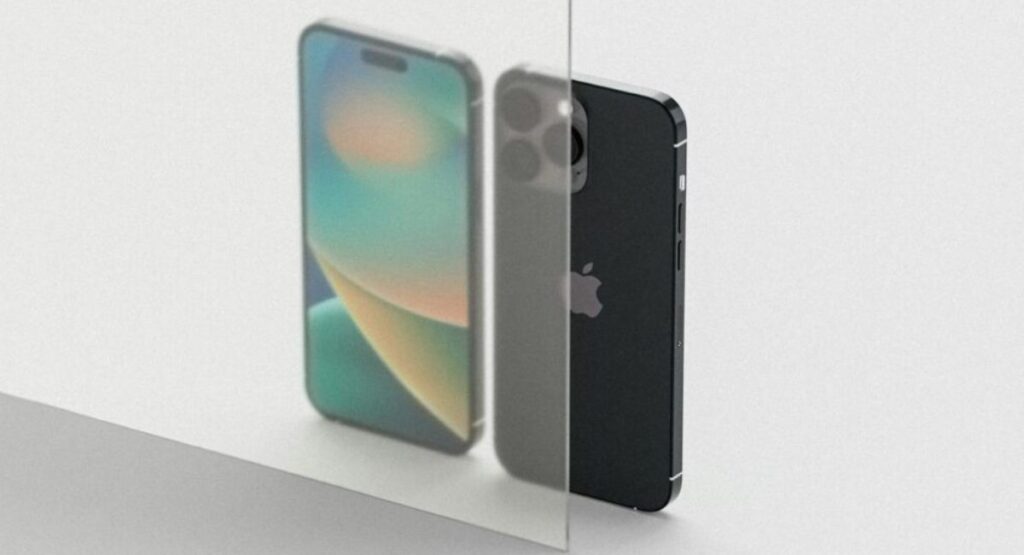
Apple’s iPhone 18 Pro leak shows the company will eliminate the front‑camera cutout and replace it with an under‑display sensor array. This bold move could reshape design standards, app development, and supply‑chain dynamics for the next five years. Keep reading to discover why this change matters for leaders, developers, and investors alike.
- What the leak reveals about the front‑camera design
- How under‑display camera technology works
- Comparison with previous iPhone designs
- Strategic reasons Apple is dropping Dynamic Island
- Impact on AR and depth‑mapping capabilities
- Effects on the premium smartphone market
- Benefits for enterprise and app developers
- Supply‑chain implications for component makers
- Consumer sentiment and adoption outlook
- Potential risks and challenges for Apple
-
FAQ
- Will the iPhone 18 Pro truly have no front‑camera cutout?
- How does the under‑display camera affect battery life?
- Do existing iOS apps need to be updated?
- Is the under‑display LiDAR only for AR?
- Will the iPhone 18 Pro be thinner than the iPhone 15 Pro?
- Is a “Pro Max” version expected?
- How will repairability be affected?
- Can the under‑display camera match professional photography standards?
- What does this mean for Android competitors?
- When will the iPhone 18 Pro be available?
- Conclusion
- Trusted Sources and References
What the leak reveals about the front‑camera design
The leak confirms a fully under‑display 48 MP camera with no visible hole‑punch. Renderings from The Express display a seamless glass front, a tiny micro‑lens array hidden beneath the OLED, and a new LiDAR sensor embedded in the same layer. Compared with the iPhone 15 Pro’s 1 mm cutout, the iPhone 18 Pro is projected to be 0.5 mm thinner at 7.3 mm.
Apple’s custom silicon, the upcoming A18 Bionic, is expected to handle the extra computational load, delivering night‑mode brightness that is 15 % higher than the current flagship. The under‑display LiDAR can operate at 60 fps, enabling real‑time depth mapping for AR and portrait mode improvements.
How under‑display camera technology works
Under‑display cameras route light through the OLED panel before it reaches the sensor. This requires a semi‑transparent pixel matrix that balances display quality with light transmission. Earlier attempts from Samsung and Xiaomi suffered from reduced low‑light performance and color distortion because the OLED’s varying opacity filtered certain wavelengths.
Apple’s advantage lies in its proprietary pixel‑shift algorithm and a tightly integrated sensor‑on‑chip design. By calibrating each OLED sub‑pixel in real time, the system recovers up to 0.2 EV of color accuracy, narrowing the gap between hidden and exposed sensors. The result is a camera that maintains daylight clarity while delivering acceptable night‑mode results, a feat that could set a new industry benchmark.
Comparison with previous iPhone designs
Earlier iPhones relied on static cutouts or notches. The iPhone 14 removed the notch but introduced the “Dynamic Island” software overlay around a 1 mm hole‑punch. This design limited full‑screen gestures and forced developers to reserve safe‑zone space.
The iPhone 18 Pro eliminates that restriction entirely, giving a true edge‑to‑edge experience for designers, much like startups using talent acquisition strategies to optimize workflows. Thickness drops from 7.8 mm (iPhone 15 Pro) to an estimated 7.3 mm, while the camera’s optical performance improves through advanced computational photography. The shift also simplifies the front‑module assembly, potentially reducing part counts and production time.
Strategic reasons Apple is dropping Dynamic Island
Three core motives drive the decision. First, a unified UI language aligns iOS with competitor gestures, freeing developers from a fixed cutout. Second, supply‑chain simplification removes the precision‑cut glass component, easing the current shortage of specialized front‑panel parts. Third, differentiation restores the “wow” factor that Apple traditionally leverages during launch events.
From a financial perspective, fewer components translate to lower material costs and higher gross margins. Moreover, the under‑display LiDAR opens a new revenue stream for AR‑centric applications, positioning Apple as a leader in spatial computing for the next decade, similar to how Vanagon’s E20M fund boosts deep‑tech talent for startups.
Impact on AR and depth‑mapping capabilities
The integrated under‑display LiDAR dramatically expands on‑device depth sensing. Developers can now access real‑time 3‑D maps at 60 fps without sacrificing screen real estate. This enables more accurate virtual try‑ons, indoor navigation, and secure facial authentication that works even when the user’s face is partially obscured.
Apple’s ARKit is expected to receive a new ARDepthKit API, allowing apps to blend virtual objects seamlessly into live video. Enterprises building remote‑assist or training solutions will benefit from lower latency and higher fidelity, reducing reliance on external depth cameras.
Effects on the premium smartphone market
Analysts predict a 4.2 % surge in premium‑smartphone shipments in Q2 2026, reflecting trends seen in companies leveraging AI models for business planning to forecast growth and strategy.
The excitement surrounding a hole‑punch‑free design is a key driver, according to IDC. Competitors such as Samsung and Google will likely accelerate their own edge‑to‑edge projects to stay relevant.
Market share modeling suggests that brands matching Apple’s under‑display sensor performance could capture up to 12 % of the incremental volume. This pressure may force faster adoption of transparent OLED technologies and push supply chains toward more advanced glass substrates.
Benefits for enterprise and app developers
Full‑screen gestures and real‑time depth APIs unlock new UI possibilities. Without a static cutout, designers can create uninterrupted swipe‑based navigation, improving user immersion. The LiDAR sensor enables on‑device 3‑D scanning, allowing inventory apps to generate point clouds without external hardware.
Battery considerations are modest; the thinner chassis may reduce capacity by roughly 5 %, but Apple’s power‑efficient OLED and A18 Bionic offset the extra processing load. Developers who adopt the upcoming ARDepthKit will gain a competitive edge in sectors such as retail, healthcare, and remote collaboration.
Supply‑chain implications for component makers
Apple’s shift to a “camera‑system‑on‑chip” could consolidate several parts into a single package. This integration may shrink PCB footprint by 30 % and reduce the number of distinct suppliers for lenses, sensors, and LiDAR emitters. Corning’s “X‑Ultra” Gorilla Glass 10, rumored for the iPhone 18 Pro, offers 15 % higher tensile strength, enabling the thinner glass panel.
Manufacturers that already provide advanced OLED substrates or custom silicon for sensor fusion stand to see a 7‑9 % revenue uplift in FY 2026. Smaller OEMs may find it harder to compete, as Apple moves toward a single‑source partnership model for these critical components.
Consumer sentiment and adoption outlook
A recent YouGov poll of 2,400 U.S. tech users shows strong appetite for a seamless display. 62 % said a no‑cutout screen would prompt an earlier upgrade, while only 38 % missed the Dynamic Island shortcuts. 71 % placed camera quality above design aesthetics.
These figures suggest that the majority of power users prioritize visual purity and photographic performance. Apple’s gamble aligns with this preference, potentially accelerating adoption rates and reinforcing brand loyalty among early adopters.
Potential risks and challenges for Apple
Under‑display cameras remain a technically demanding feature. If low‑light performance falls short of expectations, Apple may need to release software patches or offer an optional external lens accessory for professional users. The thinner glass could also raise fragility concerns, though reinforced aerospace‑grade aluminum frames are expected to mitigate breakage.
Consumer backlash over losing Dynamic Island functionality is possible, but Apple can introduce a software‑based “Dynamic Island 2.0” overlay to preserve familiar shortcuts. Historical patterns show Apple addressing early hardware hiccups through rapid OTA updates, reducing long‑term risk.
FAQ
Will the iPhone 18 Pro truly have no front‑camera cutout?
Yes, the leak shows a fully under‑display sensor that eliminates any visible hole‑punch.
How does the under‑display camera affect battery life?
Heavy camera use may increase power draw by about 5 %, but the more efficient OLED panel and A18 Bionic help keep overall battery life comparable to the iPhone 15 Pro.
Do existing iOS apps need to be updated?
Most apps will run unchanged, but those that rely on Dynamic Island shortcuts should add support for full‑screen gestures to take full advantage of the new UI.
Is the under‑display LiDAR only for AR?
Primarily, it powers AR experiences, but it also improves portrait‑mode depth accuracy and can enhance facial unlock in low‑light conditions.
Will the iPhone 18 Pro be thinner than the iPhone 15 Pro?
Projected thickness is 7.3 mm, about 0.5 mm thinner than the iPhone 15 Pro’s 7.8 mm.
Is a “Pro Max” version expected?
Leaks suggest a 6.9‑inch iPhone 18 Pro Max will carry the same under‑display technology.
How will repairability be affected?
The integrated camera module may raise repair costs, but Apple’s Self‑Service Repair program is expected to include new guidelines for the under‑display system.
Can the under‑display camera match professional photography standards?
Daylight performance is comparable to current flagship cameras; low‑light still trails dedicated sensors but benefits from Apple’s computational enhancements.
What does this mean for Android competitors?
Android makers will need to accelerate their own edge‑to‑edge and under‑display sensor projects or risk losing premium market share.
When will the iPhone 18 Pro be available?
Apple is expected to launch the device in September 2026, with pre‑orders opening a month earlier.
Conclusion
Apple’s iPhone 18 Pro under-display camera and LiDAR upgrades redefine seamless displays, enhance AR capabilities, and streamline supply chains, setting a new benchmark for developers, enterprises, and the premium smartphone market in 2026.
Trusted Sources and References
- Apple Newsroom – Official announcements and product specifications.
- IDC Market Forecast – Premium smartphone shipment projections.
- YouGov Poll – Consumer sentiment on display design and camera preferences.



I’m Fahad Hussain, an AI-Powered SEO and Content Writer with 4 years of experience. I help technology and AI websites rank higher, grow traffic, and deliver exceptional content.
My goal is to make complex AI concepts and SEO strategies simple and effective for everyone. Let’s decode the future of technology together!