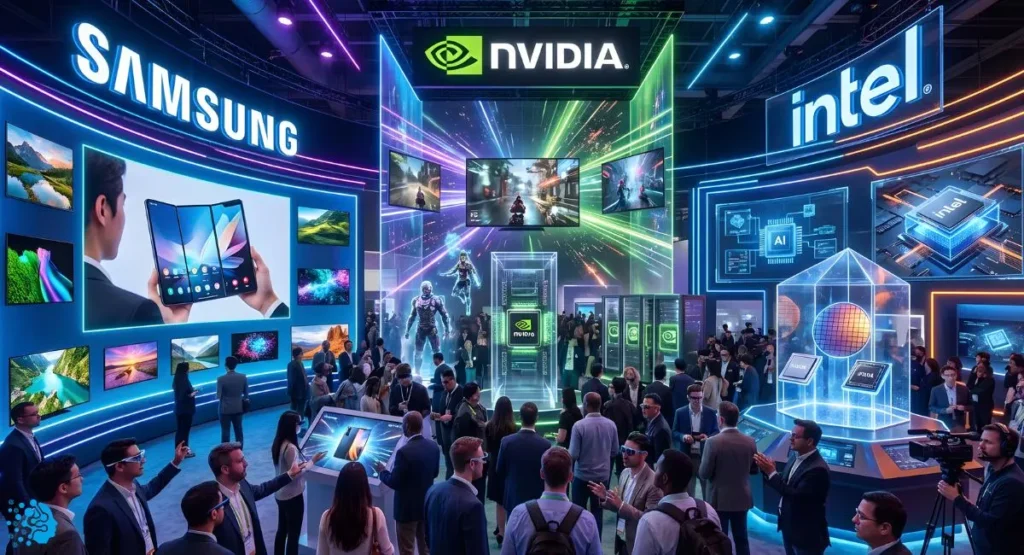
CES 2026 Live: Surprising Announcements from Samsung, NVIDIA, and Intel. At CES 2026 in Las Vegas, Samsung unveiled foldable and AI-powered devices, NVIDIA introduced its next-gen AI chips and upscaling tech, and Intel launched new high-performance AI-ready processors. In this article, we cover the most important CES 2026 announcements, from Samsung’s displays to NVIDIA’s AI roadmap and Intel’s 18A processors, with clear timelines and impact.
- Why CES 2026 Matters: AI, Gaming, and Consumer Tech Collide
- LEGO Just Did Something Nobody Expected: Smart Bricks Are Here
- Intel's 18A Processor Changes the Game (and Brings Manufacturing Home)
- Samsung Folded Again This Time with Three Screens
- NVIDIA's AI Announcements Prove AI Gaming Is Real (Not Fake Frames)
- Qualcomm's Snapdragon X2 Plus: The Budget AI Laptop Play
- Dell Admits It Was Wrong: XPS Brand Returns
- AMD Counters with Zen 5 and a Clear Roadmap
- Gaming: A Three-Front War for Performance
- What Ships When: Availability Matters
- AI Isn't Hype Anymore
-
FAQs: What You're Actually Asking About CES 2026
- 1. When can I actually buy these products?
- 2. Is DLSS 4.5 actually fixing the "fake frames" problem?
- 3. Will LEGO Smart Bricks work with my existing LEGO collection?
- 4. What's the real difference between Snapdragon X2 Plus and X2 Elite?
- 5. Is Intel's 18A process actually faster than TSMC's 3nm?
- 6. Do I need a handheld gaming PC, or should I wait for Nintendo/Steam?
- 7. Is Samsung's 130-inch TV worth the price?
- 8. Will Zen 6 actually compete with Intel 18A?
- 9. Should I buy a new laptop now or wait for these CES products?
- 10. What does "80 TOPS NPU" actually mean for me?
- Conclusion
Why CES 2026 Matters: AI, Gaming, and Consumer Tech Collide
CES 2026 isn’t just another tech conference; it’s the moment when the chip wars, AI revolution, and gaming boom converge on the Vegas floor. Every major player showed up with something big, and honestly, some of these announcements actually hit differently.
This year’s theme? AI everywhere. But not the vague, oversold kind you’ve been hearing about. We’re talking about tangible hardware backed by real performance gains, from your laptop’s processor to your gaming monitor refresh rate.
CES 2026 also lands at a time when industry confidence is being tested—especially after tech billionaires cashed out billions as AI stocks surged, raising questions about how sustainable the current AI boom really is.
LEGO Just Did Something Nobody Expected: Smart Bricks Are Here
The biggest surprise at CES 2026 came from a toy company, not a chip manufacturer. LEGO unveiled its Smart Brick system, and it’s genuinely the most significant LEGO innovation in 50 years. Yes, you read that correctly.
Here’s what they did: Each Smart Brick contains a custom-made silicon chip (smaller than a standard LEGO stud), packed with sensors, accelerometers, LEDs, a miniature speaker, and wireless connectivity. These aren’t just regular LEGO bricks—they respond to how you play with them. Tilt the brick, and it detects movement. Build an X-Wing, and it emits engine sounds. Your creations literally come to life.
The Smart Play system launches March 1, 2026, with Star Wars sets coming first. Why this matters: LEGO just eliminated the screen from digital play. Kids get the tactile, creative joy of building with the interactive response they expect from modern toys. Parents? They’ll appreciate something that doesn’t require a tablet.
Backwards compatible with existing LEGO System-in-Play, so your current collections aren’t obsolete.
Intel's 18A Processor Changes the Game (and Brings Manufacturing Home)
Intel dropped its Core Ultra Series 3 processors, code-named Panther Lake. For the first time, these chips are built on Intel’s proprietary 18A process, the most advanced semiconductor technology manufactured inside the United States. This is actually significant geopolitically and technically.
Specs-wise: The top-tier Core Ultra Series 3 X9 delivers up to 77% faster gaming performance versus Intel’s previous generation, 60% better multithread performance, and up to 27 hours of battery life on a single charge. The integrated Xe3 graphics are 50% more powerful than the previous generation, featuring 12 Xe cores in the highest-end models.
But here’s the real flex: The NPU (neural processing unit) hits 50 TOPS dedicated to AI tasks, and Intel’s triple approach (CPU + GPU + NPU all optimized for AI) is smarter than single-core AI compute.
Over 200 PC designs are expected to ship with Series 3 by late January 2026. More importantly, Intel’s also creating handheld-exclusive variants called Intel Core G3, custom-built for portable gaming PCs with optimized GPU performance. Translation: handheld gaming is about to get a serious power bump.
This renewed focus on domestic manufacturing aligns with broader US policy trends, including the 2026 solar outlook and energy policy shifts that aim to strengthen long-term tech and energy independence.
Samsung Folded Again This Time with Three Screens
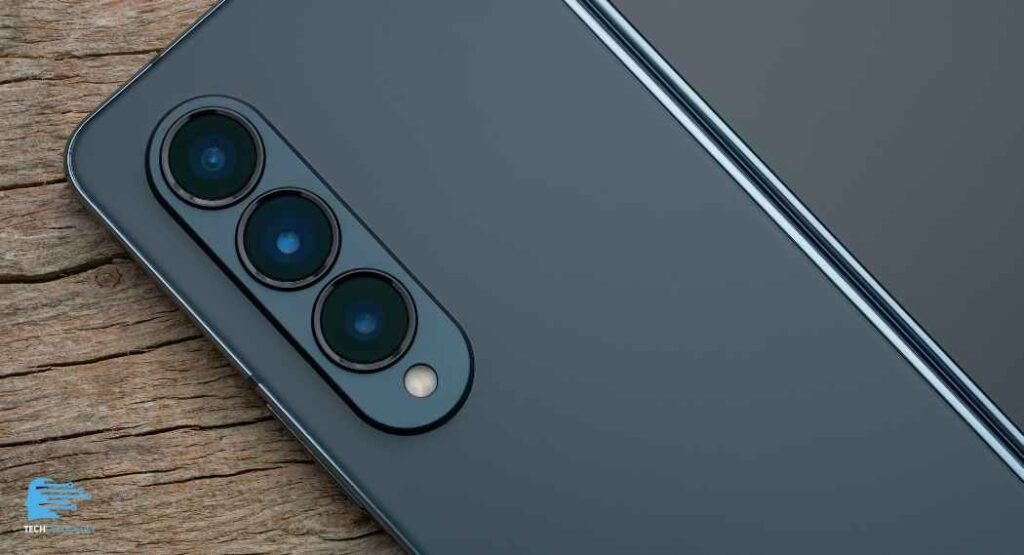
Samsung Galaxy Z Fold is what happens when you give engineers a problem and say, “Make it bigger.” This is the company’s first tri-folding phone, and it’s not a gimmick; it’s a legitimate productivity device. The 10-inch screen with a 4:3 aspect ratio unfolds into something that actually feels like a small tablet, not a stretched phone.
Reviewers on the ground called it a “remarkable feat of engineering.” For content creators, video watchers, and people who multitask constantly, this solves a real problem: you get tablet productivity in a pocketable size.
On the display front, Samsung also dropped a 130-inch Micro RGB TV, their largest ever. This isn’t for normal people, but it sets the standard for luxury home theater. More practically, Samsung’s new 34-inch QD-OLED gaming panel achieves a 360Hz refresh rate with an innovative RGB stripe pattern that eliminates text fringing, effectively addressing a long-standing issue raised by gamers and designers.
The Home Companion strategy: Samsung unveiled an AI ecosystem of appliances, refrigerators with voice control, laundry combos with AI fabric recognition, and robot vacuums that actually clean. It’s not about individual products; it’s about a connected home that understands you.
NVIDIA's AI Announcements Prove AI Gaming Is Real (Not Fake Frames)
NVIDIA had to address the elephant in the room: DLSS 4.5 and accusations of “fake frames.” At CES, they showed DLSS 4.5, their latest AI upscaling tech, and the company is claiming it actually fixes the frame-generation skepticism that plagued earlier versions.
New G-SYNC Pulsar gaming monitors represent a different kind of innovation; they’re the first to integrate G-SYNC technology directly into the display scaler, working with MediaTek. This eliminates the need for dedicated G-SYNC modules, making the tech cheaper and more accessible for monitor manufacturers. NVIDIA validated another 63 G-SYNC Compatible displays, including new 2026 models from LG and Samsung, some hitting 1,040Hz dual-mode competitive gaming specs.
On the infrastructure side, NVIDIA announced the Vera Rubin architecture, arriving ahead of schedule, and a digital twin partnership with Siemens to create virtual facsimiles of chips and factory racks before they’re physically built. For data center customers, this cuts development time drastically.
GeForce RTX 50 Series cards are coming with path-traced gaming support across even more titles. For creators and gamers, the GPU roadmap is aggressive. RTX 5070 and 5080 laptops are already appearing at CES from partners like Acer.
As AI moves deeper into consumer hardware, regulation is catching up too, especially with new 2026 California chatbot child safety laws shaping how AI-powered systems interact with younger users.
Qualcomm's Snapdragon X2 Plus: The Budget AI Laptop Play
After launching Snapdragon X2 Elite last year, Qualcomm added a new middle tier with Snapdragon X2 Plus, specifically designed for more affordable Windows laptops.
The specs: X2 Plus comes in 10-core and 6-core configurations, hitting 35% better single-core performance and 17% better multi-core performance versus the original Snapdragon X Plus. Both versions reach 4GHz boost, share the same 80 TOPS NPU (the highest consumer SoC NPU available), and use TSMC’s N3P process, delivering 43% reduced power consumption compared to first-gen X Plus chips.
What this means practically: Budget Windows laptops are about to get serious AI capabilities without the premium price. Qualcomm expects X2 Plus devices in Q1 2026 and positions them as competitive alternatives to Intel’s low-power mobile offerings like Lunar Lake.
Dell Admits It Was Wrong: XPS Brand Returns
In a rare moment of self-awareness, Dell admitted killing the XPS brand at CES 2025 was a mistake. COO Jeff Clarke confirmed the company is resurrecting one of the most respected laptop lines in tech.
New XPS 14 and XPS 16 models are arriving with Intel Core Ultra Series 3 processors, combining the brand’s legacy of premium build quality with 2026’s most advanced mobile silicon. For professionals who know what XPS means—rock-solid engineering and design, this is a win.
Why it matters: Brand recognition is currency. XPS has 15+ years of reputation as the gold-standard ultrabook. Dell’s admission that “simpler portfolio” failed shows the company understands that consumers value heritage and consistency.
AMD Counters with Zen 5 and a Clear Roadmap
AMD didn’t shock the room with surprise announcements, but the company came prepared with a clear strategy. Ryzen 9000X3D CPUs with V-Cache and Ryzen 9000G APUs using Zen 5 architecture are coming, targeting the high-end desktop and integrated-graphics markets, respectively.
Beyond 2026, AMD’s roadmap reveals Zen 6 on TSMC’s 2nm N2 process (the industry’s first) and Zen 7 planned for 2027–2028 with a new Matrix Engine for deeper AI integration. For budget-conscious builders and APU enthusiasts, this roadmap says AMD is playing the long game.
Gaming: A Three-Front War for Performance
CES 2026 proved gaming is now the intersection of three technologies: AI upscaling (DLSS 4.5, FSR Redstone), display innovation (NVIDIA’s G-SYNC Pulsar, Samsung’s 360Hz OLED, 1,040Hz competitive displays), and mobile compute (Intel’s handheld variants, Snapdragon X2’s NPU).
Laptop gaming is evolving the fastest. ASUS’s ROG Zephyrus Duo dual-screen laptop is the kind of weird innovation CES celebrates, split your screen, reduce latency, and push creative workflows. It’s not for everyone, but for competitive multiplayer and content creators, it’s a tool worth exploring.
Console-killer predictions aside, what’s clear is that mobile gaming is finally catching up to desktop performance, and the AI layer makes the gap even smaller.
What Ships When: Availability Matters
Here’s where the rubber meets the road. LEGO Smart Bricks launch March 1, 2026. Intel Core Ultra Series 3 systems are already shipping (late January 2026), with 200+ designs confirmed. Samsung’s TriFold pricing is TBD globally, but Korean pricing starts around $2,500.
Qualcomm expects Snapdragon X2 Plus devices by the end of Q1 2026. Dell XPS? Coming soon, with no firm date yet. NVIDIA RTX 50 Series and DLSS 4.5 are already rolling out to partners.
The takeaway: 2026 is the year these technologies actually hit consumers, not just press releases.
AI Isn't Hype Anymore
What made CES 2026 feel different from 2025 or 2024 is that AI stopped being a buzzword and started being a foundation. Every CPU has an NPU. Every laptop advertises multiday battery life because AI computing is now locally efficient. Your toys respond to motion. Your home understands context.
Is it all perfect? No. Prices aren’t set yet. Some announcements don’t have firm launch dates. And yes, there will be marketing fluff. But the hardware is real, and it’s shipping fast.
This shift mirrors a broader trend where tech companies are showing real AI transformation in 2026, moving beyond demos toward products that deliver measurable gains.
FAQs: What You're Actually Asking About CES 2026
1. When can I actually buy these products?
LEGO Smart Bricks launch March 1, 2026. Intel Core Ultra Series 3 systems are shipping in late January 2026. Snapdragon X2 Plus devices are expected in Q1 2026. Samsung TriFold pricing and date TBD. Dell XPS coming “soon” with no firm date.
2. Is DLSS 4.5 actually fixing the “fake frames” problem?
NVIDIA claims yes, with better frame coherence and less ghosting. Independent reviews will confirm this in early 2026.
3. Will LEGO Smart Bricks work with my existing LEGO collection?
Yes. They’re fully compatible with the existing LEGO System-in-Play, so older sets still work.
4. What’s the real difference between Snapdragon X2 Plus and X2 Elite?
Plus is for budget laptops (10-core and 6-core variants). Elite is premium (18-core and 12-core). Both have 80 TOPS NPUs. Elite has more GPU performance for gaming.
5. Is Intel’s 18A process actually faster than TSMC’s 3nm?
Not directly comparable, but 18A is more advanced for AI workloads and represents major US manufacturing progress.
6. Do I need a handheld gaming PC, or should I wait for Nintendo/Steam?
Depends on your budget and desire for portability. Intel Core G3 chips will enable powerful handhelds, but pricing and game ecosystem are still TBD.
7. Is Samsung’s 130-inch TV worth the price?
Only if you have a luxury media room budget. For normal people, Samsung’s OLED and Micro RGB options at 75–98 inches are more practical.
8. Will Zen 6 actually compete with Intel 18A?
Yes. Zen 6 on 2nm N2 launches later in 2026. AMD’s roadmap is aggressive and credible.
9. Should I buy a new laptop now or wait for these CES products?
If you need one today, current models are fine. If you can wait 4–6 weeks, CES 2026 products offer genuine generational improvements.
10. What does “80 TOPS NPU” actually mean for me?
It means your laptop can run advanced AI models locally without cloud connectivity, improving privacy, latency, and battery life.
Conclusion
CES 2026 delivered what the tech industry promised but rarely executes: real hardware with real performance gains. From LEGO’s 50-year innovation leap to Intel’s US-made 18A processors, from Samsung’s tri-fold engineering to NVIDIA’s AI gaming solutions, this year’s announcements hit different. The question isn’t whether these technologies exist—they’re already shipping. The question is whether consumers are ready to pay for them. By Q1 2026, we’ll have the answer.


TechDecodedly – AI Content Architect. 4+ years specializing in US tech trends. I translate complex AI into actionable insights for global readers. Exploring tomorrow’s technology today.