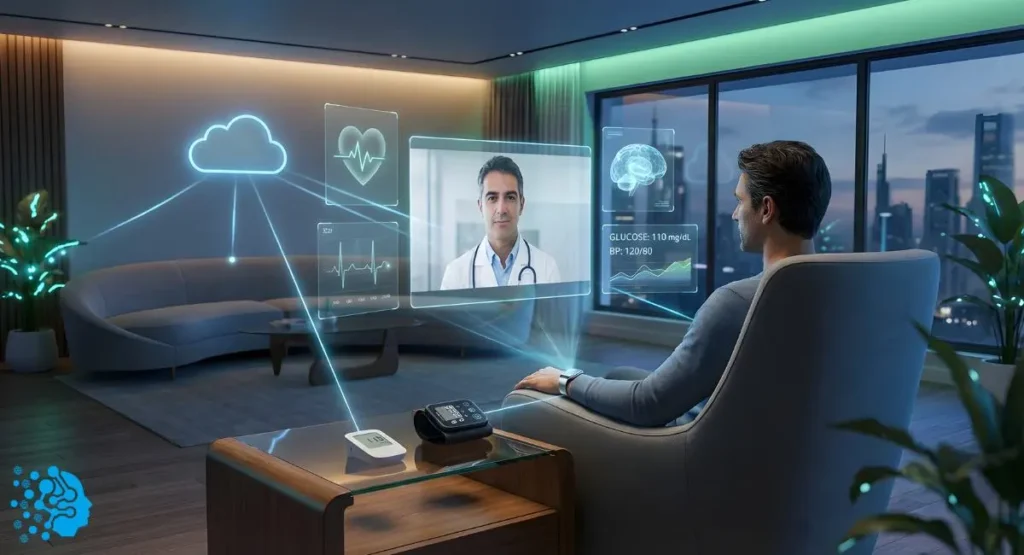
Future healthcare technology is elevating at-home care by moving medical services from hospitals to homes through AI, telehealth, wearables, and cloud platforms, making care proactive, cost-effective, personalized, and accessible while reducing hospital visits and easing the burden on patients, providers, and caregivers.
This article breaks down the AI, wearables, telehealth, and cloud systems transforming at-home care, showing how your living room is becoming the clinic of the future, step by step.
Curious how tech skills boost your career alongside healthcare innovation? Read more on mastering Microsoft Word effectively.
- The Great Shift: Why Is Healthcare Moving Home?
- The Tech Backbone of At-Home Care
- Telehealth: Your Doctor Is Now in Your Living Room
- Remote Patient Monitoring (RPM): Your 24/7 Guardian Angel
- Real Stories, Real Impact: How RPM Is Saving Lives
- The Unsung Enabler: How 5G Powers At-Home Care
- The Brains of the Operation: AI and Data Integration
- "Hey Doctor": The Rise of Ambient AI
- The Tech Giants' Race to Your Living Room
- Microsoft’s Blueprint: Powering the Care Continuum
- Supporting the Unseen Heroes: Easing the Burden on Caregivers
- Overcoming the Hurdles: Data Security and the Digital Divide
-
Frequently Asked Questions (FAQs)
- 1. What is at-home healthcare technology?
- 2. How does remote patient monitoring (RPM) work?
- 3. What are the main benefits of at-home healthcare?
- 4. Can at-home tech really reduce hospital visits?
- 5. What is AI's role in at-home care?
- 6. Will this technology replace my doctor?
- 7. Is my health data safe with these technologies?
- 8. What is the difference between telehealth and remote patient monitoring?
- 9. How is Microsoft involved in at-home healthcare?
- 10. Is this technology accessible to everyone?
- Conclusion
The Great Shift: Why Is Healthcare Moving Home?
For generations, the hospital has been the center of the medical universe. A place of sterile hallways, beeping machines, and concentrated expertise. But a quiet revolution is underway, shifting the center of gravity away from these institutions and placing it where we are most comfortable: our homes.
This isn’t just a trend; it’s a seismic shift driven by two powerful forces: demographics and economics.
First, we have an aging population. In the U.S. and across the globe, people are living longer. Many are managing chronic conditions like heart failure, diabetes, or COPD. The overwhelming preference for this demographic is to “age in place”—to live independently in familiar surroundings. This creates an enormous demand for healthcare services that can be delivered outside the four walls of a hospital.
Second, the cost of traditional healthcare is spiraling out of control. A single hospital admission can be financially devastating for individuals and a massive strain on the healthcare system. At-home care presents a far more cost-effective alternative. By monitoring patients remotely and intervening early, providers can dramatically reduce expensive emergency room visits and hospital readmissions. It’s a win-win that aligns perfectly with the industry’s pivot toward value-based care, where the focus is on keeping patients healthy, not just treating them when they’re sick.
The Tech Backbone of At-Home Care
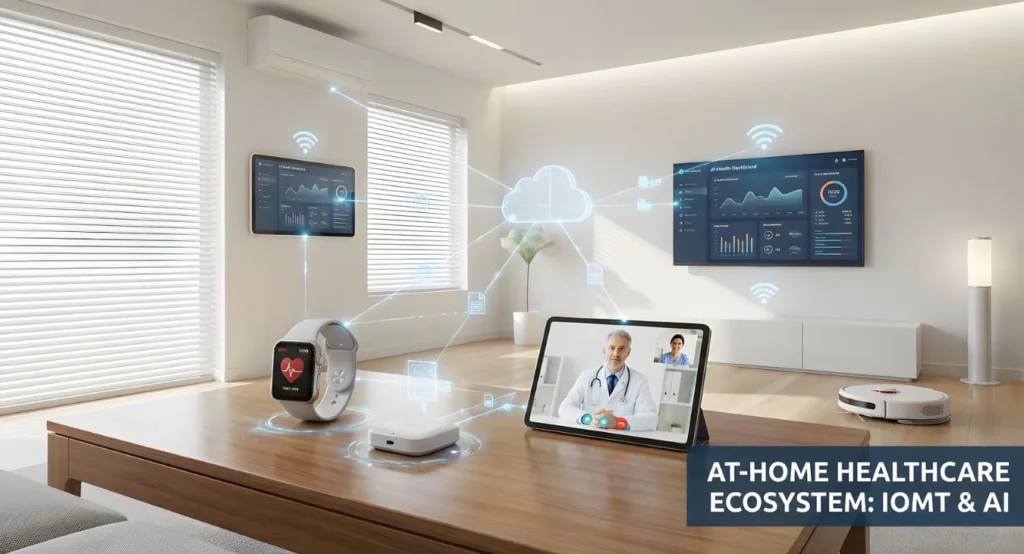
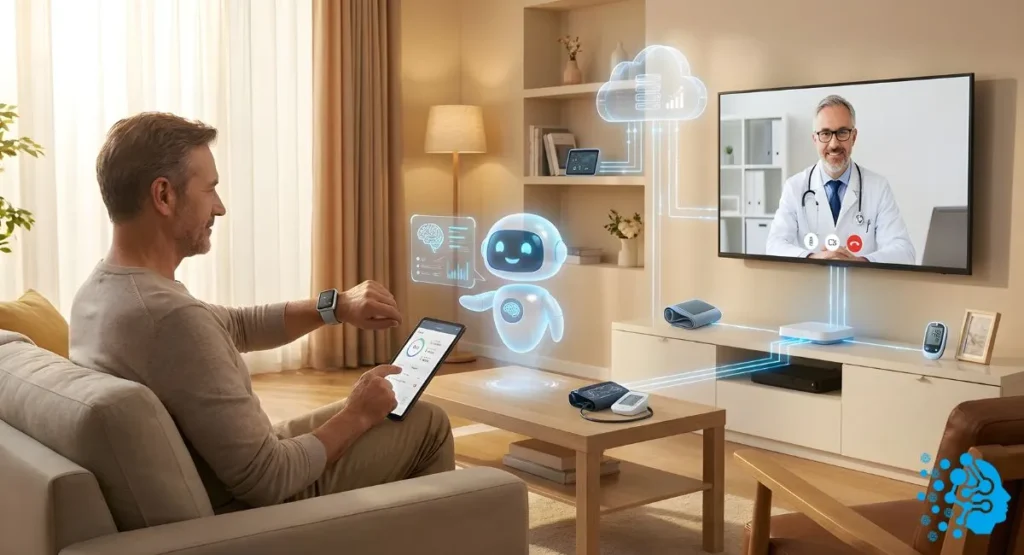
This revolution isn’t happening because of a single gadget. It’s powered by a sophisticated ecosystem of interconnected technologies working in harmony. Think of it as a digital health shield for your home. The main players in this ecosystem are:
- Telehealth: Virtual consultations and care delivery.
- Remote Patient Monitoring (RPM): Wearables and devices that track your health 24/7.
- The Internet of Medical Things (IoMT): The network of connected health devices.
- Artificial Intelligence (AI): The powerful brain that analyzes data and provides insights.
Let’s break down how each component works together to build the future of home healthcare.
Telehealth: Your Doctor Is Now in Your Living Room
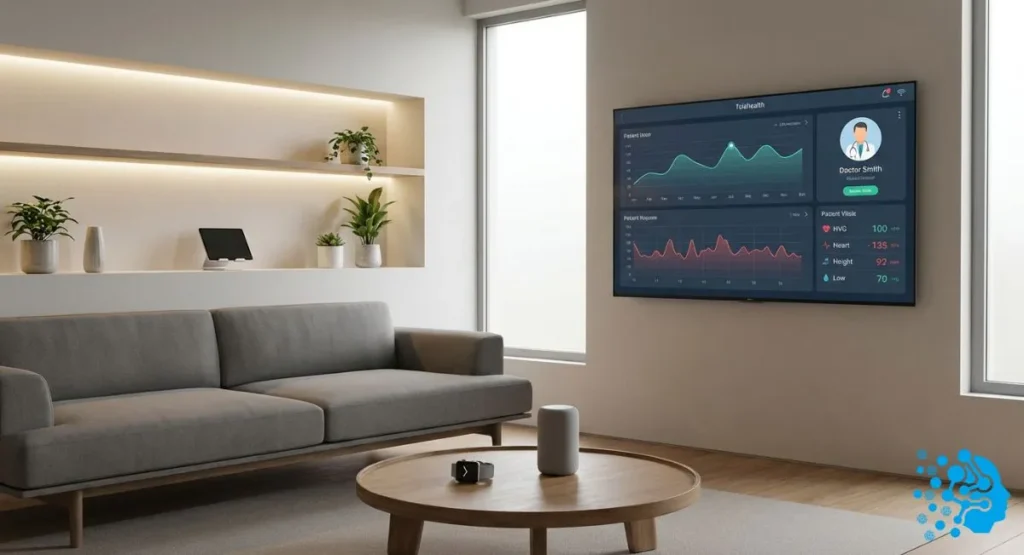
Telehealth emerged as a mainstream phenomenon during the pandemic, but its evolution has progressed far beyond simple video chats. Today, it’s a comprehensive virtual care experience. For anyone with mobility issues, those living in rural areas, or individuals managing a chronic illness that makes travel difficult, telehealth is a game-changer.
Modern platforms like Amazon Clinic and One Medical now offer 24/7 virtual consultations, allowing you to connect with a doctor at any time of day. You can get prescriptions renewed, book appointments, and manage your care—all from within an app. Even enterprise platforms like Microsoft Teams have become critical infrastructure, providing a secure, HIPAA-compliant environment for virtual visits that plug directly into a patient’s electronic health record (EHR). This seamless integration means your virtual visit is just as much a part of your medical history as an in-person one.
Want to explore career opportunities in this booming field? See healthcare technology jobs, roles, and salary insights.
Remote Patient Monitoring (RPM): Your 24/7 Guardian Angel
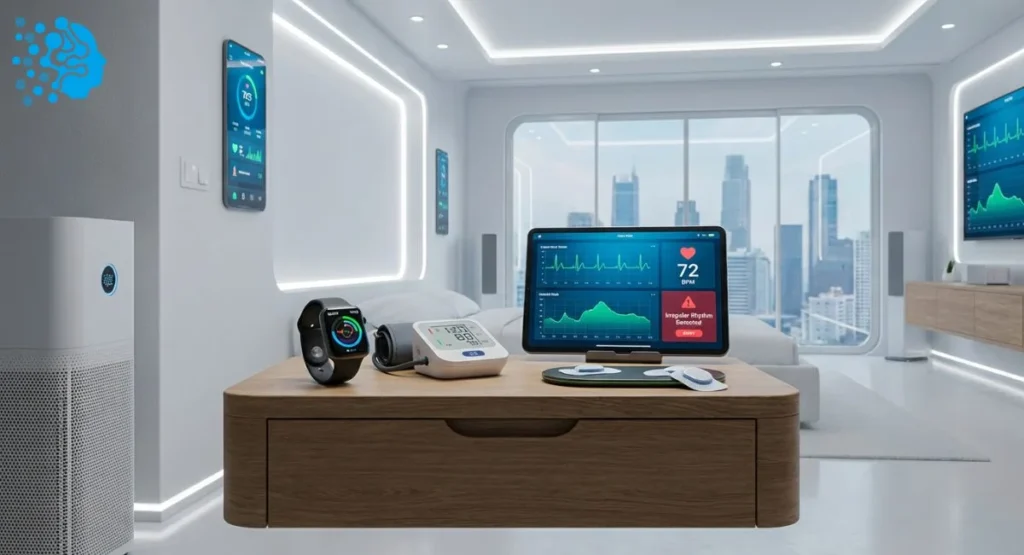
If telehealth is the communication channel, Remote Patient Monitoring (RPM) is the watchful guardian. RPM is the cornerstone of proactive at-home care. It uses a network of connected devices to keep a constant, non-intrusive eye on your health, allowing your medical team to spot potential issues long before they become a crisis.
You’re likely already familiar with some of these devices. The Apple Watch, for instance, has evolved from a fitness tracker into a powerful personal health device. It can take a clinical-grade ECG, measure blood oxygen levels, and even detect a hard fall, automatically alerting emergency services if you’re unresponsive. As publications like The Verge have noted, it’s turning a lifestyle gadget into a life-saving tool.
Similarly, Google’s Fitbit devices do more than just count steps. They track sleep quality, stress levels, and heart rate variability. This data is now being used in sophisticated programs to help patients manage serious conditions like diabetes and hypertension, providing a continuous stream of information that was previously unavailable.
Real Stories, Real Impact: How RPM Is Saving Lives
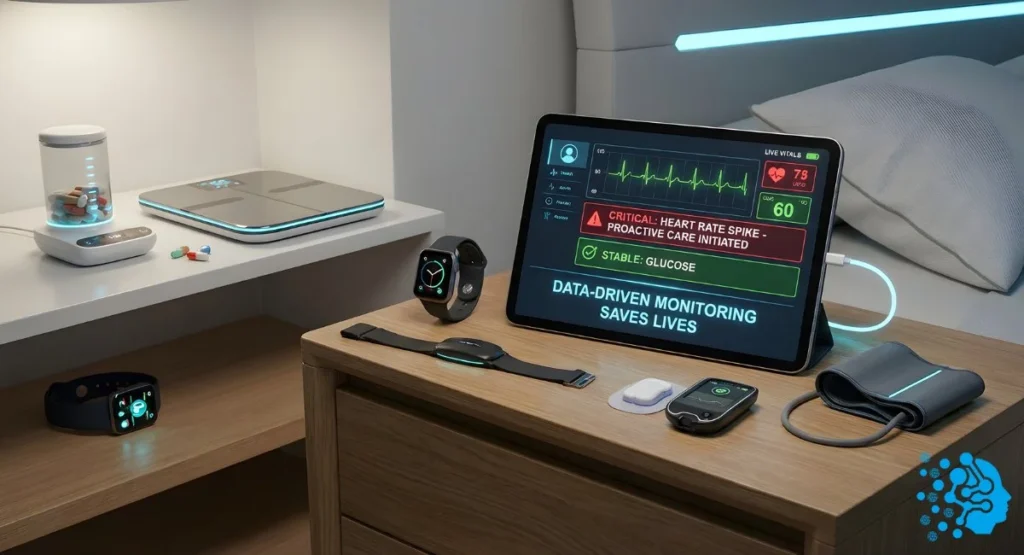
The data is impressive, but the personal stories truly illustrate the life-changing power of this technology.
- Congestive Heart Failure (CHF): The results here are stunning. Frederick Health, a Maryland-based hospital, reported an 83% drop in hospital readmissions for its CHF patients using an RPM program. Penn Medicine at Home saw a similar 73% reduction. For a patient named Cynthia, an implantable sensor that monitors her heart failure was “a life-affirming experience” that finally broke her devastating cycle of frequent ER visits.
- Chronic Obstructive Pulmonary Disease (COPD): For patients with this progressive lung disease, every breath can be a struggle. RPM provides a sense of security and control. Studies have shown a 65% reduction in unplanned hospitalizations for COPD patients in telehealth programs. One patient, George, shared that his program reduced his anxiety and gave him a better outlook, helping him focus on what he can do, not what he can’t.
- Diabetes: Continuous glucose monitors (CGM) have been a revelation. A user named Sophie called her CGM “life-changing” for helping her manage dangerous nighttime low blood sugar spells. For parents of children with Type 1 diabetes, these devices bring priceless peace of mind. One diabetes educator noted that many parents she worked with “hadn’t slept through the night for years” before their child started using a CGM that could alert them to dangerous glucose levels.
For deeper insights on AI regulations shaping tech and healthcare, check out the latest AI regulation updates.
The Unsung Enabler: How 5G Powers At-Home Care
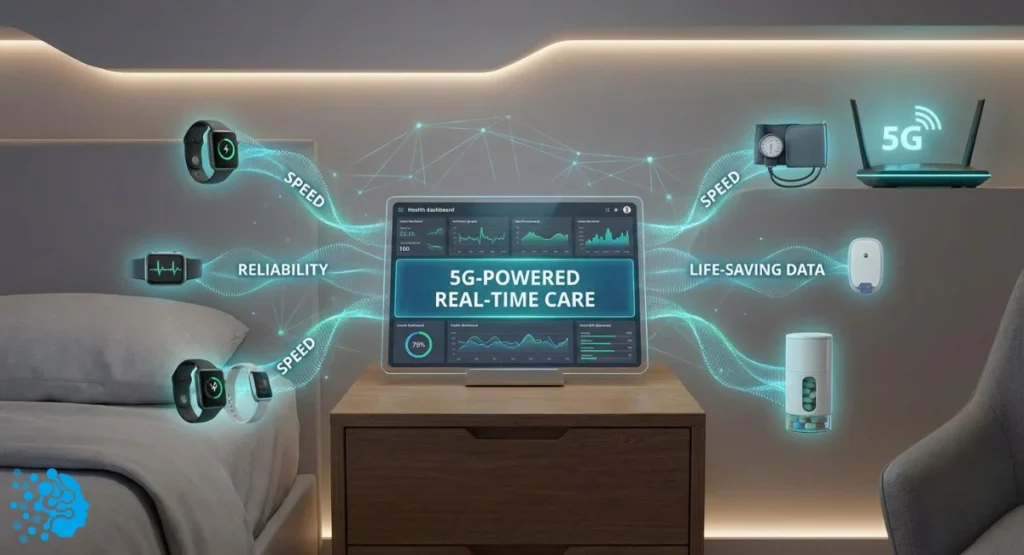
Behind the scenes, the rollout of 5G technology is a critical enabler for the entire at-home care ecosystem. While Wi-Fi is great, 5G offers the unique combination of high bandwidth, ultra-low latency, and the ability to connect a massive number of devices simultaneously.
This is crucial for real-time health monitoring. Imagine a high-definition video consultation with a specialist that never lags, or a wearable device that transmits critical heart data instantly to a clinician without any delay. For “hospital-at-home” programs, where multiple data-heavy devices are running at once, 5G provides the reliable, robust pipeline needed to ensure patient safety and seamless care coordination. It’s the invisible highway making instant, data-rich healthcare a reality.
The Brains of the Operation: AI and Data Integration
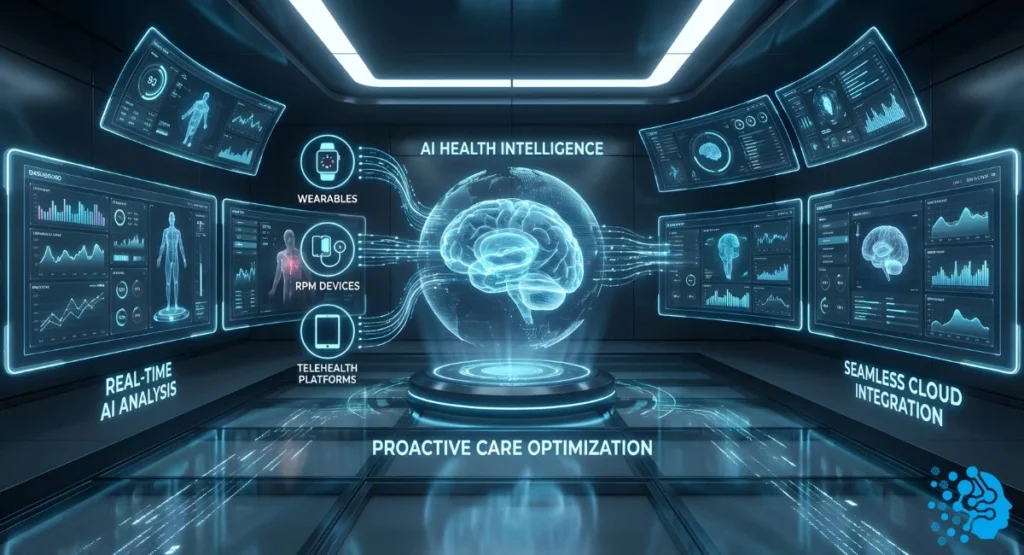
All these devices in the Internet of Medical Things (IoMT) generate a mountain of data every second. But raw data is just noise. It’s useless without a way to organize, interpret, and act on it. That’s where cloud platforms and Artificial Intelligence (AI) step in.
Platforms like Apple’s HealthKit and Google Cloud’s “Device Connect for Fitbit” serve as data aggregators, consolidating information from various sources into a single view for a comprehensive picture of your health. On a massive scale, industry-specific services like Microsoft’s Azure Health Data Services and Amazon Web Services (AWS) HealthLake are built to manage and standardize these enormous data streams. They help translate data into a common format like FHIR (Fast Healthcare Interoperability Resources), making it accessible and understandable for clinicians within their existing workflows.
"Hey Doctor": The Rise of Ambient AI
AI is the analytical engine, but its most futuristic application is “ambient intelligence.” This is where AI works invisibly in the background to help both patients and doctors, reducing friction and administrative overhead.
For clinicians, generative AI is tackling the crushing burden of paperwork, a leading cause of physician burnout. A prime example is Microsoft’s Nuance Dragon Ambient eXperience (DAX). As reported by ZDNet, this sophisticated AI listens securely to doctor-patient conversations (with consent) and automatically writes the clinical notes. This frees up doctors to put down the keyboard, make eye contact, and focus on the human in front of them.
At home, AI is also powering companions like ElliQ, designed to help older adults live independently. ElliQ can provide medication reminders, initiate check-in conversations, and connect users with family, combating the loneliness and isolation that can be so detrimental to health.
The Tech Giants' Race to Your Living Room
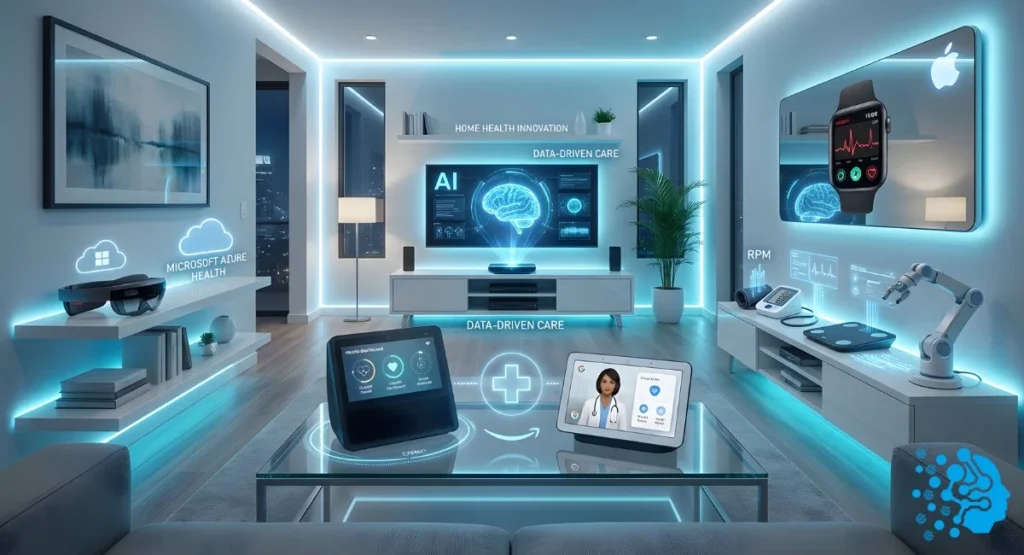
The biggest names in technology are all vying for a piece of the at-home healthcare pie, each leveraging its unique strengths:
- Amazon is building a powerful end-to-end system. Its acquisition of One Medical gives it a massive primary care network, which it combines with Amazon Pharmacy for prescription delivery and the immense power of AWS for cloud infrastructure.
- Google is leveraging the vast data from its Fitbit wearables and using its life sciences division, Verily, to build AI-powered platforms for chronic care management.
- Apple has created a secure, user-centric ecosystem around the Apple Watch and the Health app. Its strategy is to empower people to be the custodians of their own health data, giving them the tools to monitor their wellness and share that data securely with providers.
Microsoft’s Blueprint: Powering the Care Continuum
Microsoft has strategically positioned itself not as a direct healthcare provider, but as the foundational technology partner for the entire industry. Microsoft Cloud for Healthcare is a specialized cloud that bundles Azure, Dynamics 365, and Microsoft 365 into a powerful, integrated platform.
As highlighted in its own announcements, Microsoft is providing the essential groundwork for “hospital-at-home” programs and other advanced care models. With its acquisition of Nuance, it has become a leader in the ambient AI that reduces physician burnout. Microsoft’s goal isn’t to own the hospital or the clinic; it’s to empower existing providers with a seamless, interconnected platform that bridges the gap between the hospital and the home.
Supporting the Unseen Heroes: Easing the Burden on Caregivers
Let’s not forget the immense physical and emotional pressure on family caregivers. Technology is providing them with powerful new tools for support and peace of mind. One caregiver in a program for dementia said the tech “allowed her to keep her husband at home” instead of placing him in a facility. Another, whose spouse was prone to falls, used a simple wireless bed alarm to gain peace of mind, knowing she would be alerted if he tried to get up unattended. This simple alert system allowed her to finally get a full night’s sleep, a small but profound victory.
Overcoming the Hurdles: Data Security and the Digital Divide
Despite the incredible promise, there are significant challenges to overcome.
- Data Security: Protecting sensitive health data is paramount. Companies operating in this space must adhere to ironclad security protocols and strict regulations like HIPAA.
- Interoperability: Ensuring all the different devices, apps, and software platforms can “talk” to each other is a major technical hurdle. Progress is being made with standards like FHIR, but there’s still work to do.
- The Digital Divide: Perhaps the biggest barrier is equity. As organizations like the World Economic Forum have pointed out, not everyone has reliable, high-speed internet or the digital literacy to use these tools. Closing this gap with subsidized internet access and user-friendly design is crucial to ensure that the benefits of at-home healthcare are accessible to all, not just the privileged.
Frequently Asked Questions (FAQs)
1. What is at-home healthcare technology?
It’s a range of technologies—telehealth, wearable sensors, remote monitoring devices, and AI software—that allow healthcare services to be delivered safely and effectively in a patient’s home.
2. How does remote patient monitoring (RPM) work?
RPM uses connected electronic tools (like smart scales, blood pressure cuffs, and glucose monitors) to record personal health data in one location so a provider can review it from another. It’s most often used to manage chronic conditions like heart failure, diabetes, and hypertension.
3. What are the main benefits of at-home healthcare?
The biggest benefits are better health outcomes, fewer hospital readmissions, more patient independence, greater access to care for people in remote areas, and less stress on family caregivers.
4. Can at-home tech really reduce hospital visits?
Yes. Numerous studies have shown that RPM can dramatically reduce hospitalizations and ER visits. Some programs have reported reductions of over 70% for conditions like heart failure by catching problems early.
5. What is AI’s role in at-home care?
AI analyzes data from devices to predict health issues before they become critical. It also powers virtual assistants and drives “ambient” tools that automate clinical paperwork, which helps reduce doctor burnout.
6. Will this technology replace my doctor?
No. The goal is not to replace doctors, but to enhance them. This technology gives your doctor better, more continuous data to make more informed decisions about your care. It strengthens the patient-doctor relationship by focusing on proactive health rather than reactive treatment.
7. Is my health data safe with these technologies?
Top-tier tech companies and healthcare providers are legally required to comply with strict regulations like HIPAA. They invest heavily in security measures like end-to-end encryption and secure cloud storage to protect your data.
8. What is the difference between telehealth and remote patient monitoring?
Telehealth is the active delivery of care, like having a video call with your doctor. Remote Patient Monitoring (RPM) is the passive collection of health data from devices in your home that your doctor can review over time. They often work together.
9. How is Microsoft involved in at-home healthcare?
Microsoft provides a comprehensive cloud platform (Microsoft Cloud for Healthcare) that gives healthcare organizations tools for virtual visits (Teams), data analysis (Azure), and AI-powered clinical notes (Nuance DAX). It aims to be the technology backbone for providers.
10. Is this technology accessible to everyone?
Not yet. The “digital divide”—the gap in access to reliable internet and technology—is a major challenge. Efforts are underway from both public and private sectors to improve access and digital literacy to ensure these benefits reach everyone.
Conclusion
Technology is fundamentally redrawing the map of healthcare, moving the center of care from the clinic to the living room. This powerful shift, driven by a combination of smart devices, AI, and connected cloud platforms, is making healthcare more proactive, personalized, and accessible than ever before. The future of health is here, and it’s right at home.
For a full breakdown of this shift, read our complete guide on how future healthcare technology is elevating at-home care.


TechDecodedly – AI Content Architect. 4+ years specializing in US tech trends. I translate complex AI into actionable insights for global readers. Exploring tomorrow’s technology today.