As artificial intelligence reshapes business and daily life, AI regulation news is moving fast. Governments worldwide are rushing to craft rules for this powerful technology. For American tech readers, that means tracking everything from President Trump’s new policies to state laws and Europe’s landmark EU AI Act. This article breaks down the latest developments (2025–2026), covering Laws/Regulations directly regulating AI, existing laws that impact AI, core issues being addressed, and how the U.S. approach under Trump compares with efforts abroad.
- Laws/Regulations Directly Regulating AI (the “AI Regulations”)
- Other Laws Affecting AI
- Core Issues That the AI Regulations Seek to Address
- Trump Executive Order Blocking State AI Regulations
- State AI Laws in the U.S.
- U.S. AI Regulation 2026: Federal vs. State
- America’s AI Action Plan (Winning the Race)
- AI Regulations Around the World
-
FAQs
- 1. What is the current state of AI regulation in the U.S.?
- 2. Has the EU AI Act been passed yet?
- 3. Is AI going to be regulated in the U.S.?
- 4. Which country leads in AI development globally?
- 5. What are the 3 laws of AI?
- 6. Which countries have banned AI technology?
- 7. What is the 30% rule in AI usage?
- 8. What global events are expected in 2027?
- 9. Why is regulating AI so difficult?
- 10. Who is winning the AI race: USA or China?
- Conclusion
Laws/Regulations Directly Regulating AI (the “AI Regulations”)

Some jurisdictions have started passing laws specifically targeting AI. For example, the European Union adopted the EU AI Act in 2024 – the first comprehensive cross-border AI law. It applies risk-based rules to AI systems: banning certain high-risk applications (like opaque social scoring or untargeted facial recognition) and imposing strict obligations on “high-risk” uses (such as healthcare and critical infrastructure). Violating the EU AI Act can trigger hefty fines (up to 7% of a company’s global revenue).
In China, regulators released “Interim Measures” (2023) for online generative AI services. These rules encourage innovation while enforcing content controls: providers must label AI-generated content, vet training data, and block disallowed content. China’s approach balances robust support for domestic AI with strict oversight of misinformation and content safety.
The United States still has no single federal AI law. Instead, policy has come from executive orders and agencies. In 2023, President Biden issued an AI Executive Order focusing on “Safe, Secure and Trustworthy AI.” Early in 2025, President Trump issued a new EO titled “Removing Barriers to American Leadership in AI”. Trump’s 2025 order rescinded many of Biden’s directives and directed federal agencies to roll back rules that might hinder innovation. In short, it signaled a pro-growth, deregulation stance for U.S. AI policy. Congress and regulators have so far favored voluntary guidelines or adapting existing laws, rather than new mandates, to avoid slowing AI development.
Other nations are moving too: Canada, Australia and dozens more are drafting AI strategies, ethics principles, or sector-specific rules. As of early 2025, an analysis found that “at least 69 countries have proposed over 1000 AI-related policy initiatives and legal frameworks”. International bodies are also active: for example, the United Nations recently passed a resolution urging countries to adopt policies for “safe, secure and trustworthy” AI, and organizations like the OECD have published AI Principles promoting transparency and responsibility worldwide.
Other Laws Affecting AI
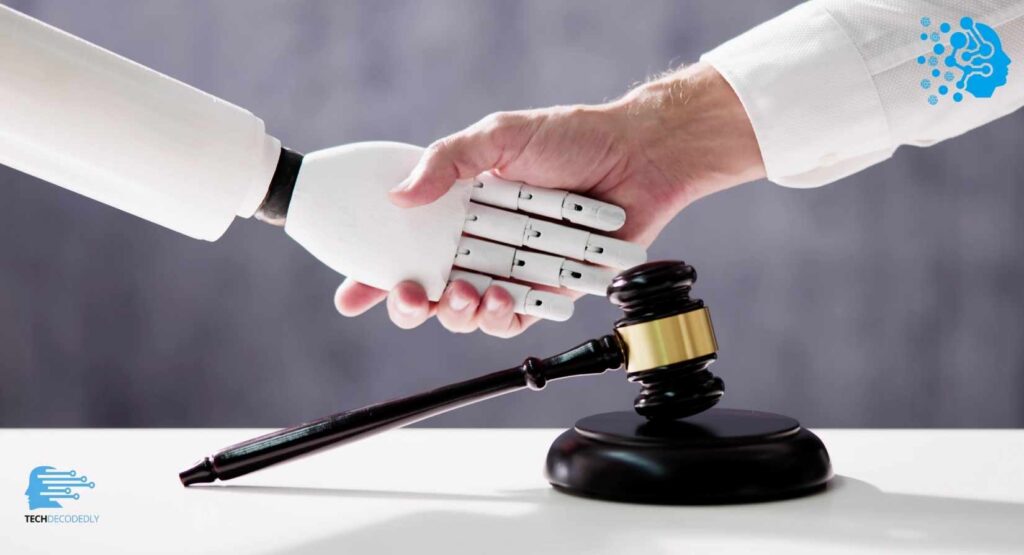
Even without AI-specific statutes, many existing laws shape how AI is used. For instance, data protection laws (like Europe’s GDPR or California’s CCPA) strictly regulate personal data – which is often used to train AI models. Copyright and patent laws are already being applied to AI outputs (e.g. lawsuits over AI-generated images and music). Competition and antitrust authorities are watching large AI players to prevent monopolistic behavior. In fact, a recent legal analysis notes that many regulations “not directly focused on AI nevertheless apply to AI by association,” including IP, antitrust, data protection and more. In the U.S., agencies like the Federal Trade Commission, the Equal Employment Opportunity Commission, and others have affirmed that existing laws (consumer protection, anti-discrimination, etc.) cover harmful AI uses. For example, if an AI tool illegally discriminates in hiring, employers can still be liable under established civil rights laws. Tech companies must also consider specialized rules – e.g., financial regulators (SEC, CFTC) monitor AI in trading, and healthcare/transport regulations apply to AI in medical or autonomous vehicles.
- Privacy & Data: Strict privacy laws limit how AI can use personal data.
- Intellectual Property: Copyright/patent rules affect AI training and outputs.
- Consumer Protection: Existing rules apply to deceptive or unsafe AI products.
- Civil Rights: Anti-discrimination laws (like Title VII) cover biased AI hiring tools.
- Other Sectoral Laws: Safety, finance, labor, etc., impose additional constraints on AI.
In short, even without a new AI law, AI developers must navigate a complex web of overlapping regulations.
Core Issues That the AI Regulations Seek to Address

Globally, AI regulations aim to tackle common problems. Key issues include:
- Bias and Discrimination – Preventing AI from producing unfair outcomes. For example, Colorado’s AI Act (2024) and similar laws focus on stopping “algorithmic discrimination” in housing, hiring and lending.
- Privacy and Data Rights – Ensuring personal data is used lawfully. Laws like Europe’s GDPR impose strict limits on using individuals’ data in AI training.
- Transparency and Explainability – Requiring disclosures when content is AI-generated or when high-risk decisions are made. California’s upcoming laws and the EU Act both mandate labeling deepfakes and revealing how AI models were trained.
- Accountability and Safety – Making sure companies take responsibility for AI’s impacts. For instance, California’s SB-53 (2025) forces AI firms (like OpenAI) to publish “risk mitigation plans” for worst-case scenarios, holding them accountable if models “break free” or are used for biothreats.
- Security and National Interest – Protecting critical infrastructure and maintaining technology leadership. Many U.S. proposals emphasize safeguarding AI chips and data centers (see America’s AI Action Plan below).
- Consumer Harm from Misinformation – Curbing malicious uses like deepfakes, scams or propaganda. Several states have banned unauthorized AI-generated sexual images, political ads, and other deceptive content.
- Welfare Concerns – Addressing extreme risks. Recent media reports of suicides linked to AI chatbot interactions have underscored real safety fears. While still rare, these “AI psychosis” incidents highlight the need for ethical AI design and oversight.
Regulations from New York to Beijing all grapple with these themes. As one White & Case legal update observes, the U.S. still has “no single AI law,” and developers face “an increasing patchwork of state and local laws” aiming to fill gaps.
Trump Executive Order Blocking State AI Regulations
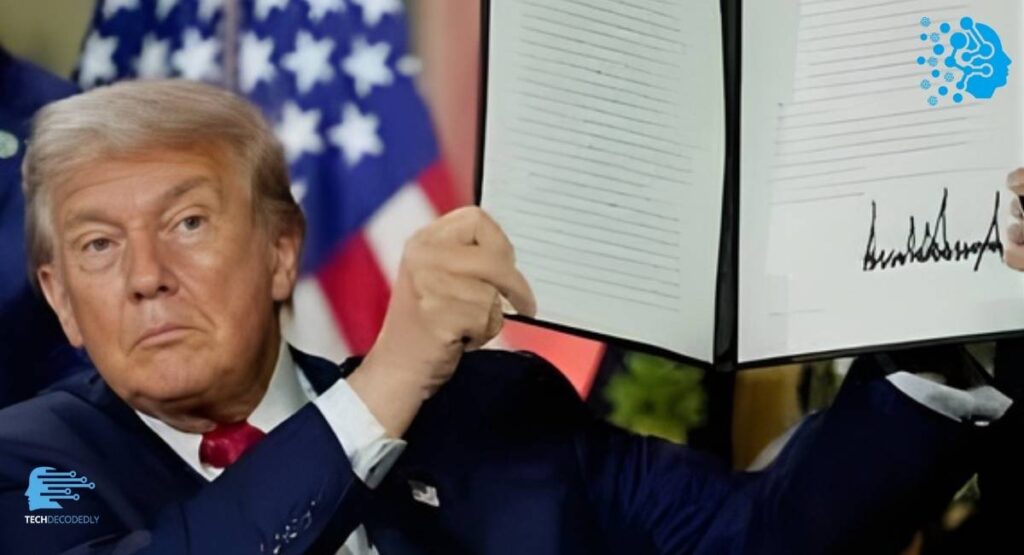
President Trump has pushed a “One Rule” philosophy: a single nationwide AI policy rather than 50 state-by-state rules. In late 2025, he announced plans for an executive order to pre-empt state AI laws. Trump argued that a patchwork would cripple the U.S. in the AI race: “You can’t expect a company to get 50 approvals every time they want to do something”. (Big Tech leaders, including OpenAI’s Greg Brockman, made similar arguments, warning that divergent state rules could stifle innovation.)
Critics, however, see danger in overriding states. Over 35 state attorneys general (both Democrats and Republicans) sent Congress a letter urging them not to block state laws, warning of “disastrous consequences” if AI goes unchecked. More than 200 state lawmakers also warned that banning local AI rules would stall progress on safety. Republican lawmakers like Rep. Marjorie Taylor Greene and Gov. Ron DeSantis have publicly opposed stripping states of their power. Sen. Marco Rubio even urged leaving AI oversight to states to preserve federalism.
The debate hinges on a trade-off: states say their citizens need protection (from anything like biased algorithms or harmful content), while Trump and tech lobbyists warn 50 different rules could bury startups in compliance. Indeed, some experts call a multistate regime a “patchwork of 50 compliance regimes” that even big tech VCs say will harm innovation. In Congress, a proposed amendment to kill all state AI laws was rejected by the Senate 99-1 earlier in 2025, reflecting broad support for state authority.
Nonetheless, Trump’s leaked draft order would create an “AI Litigation Task Force” to challenge state laws, and would direct the FCC and FTC to seek federal standards to override states. The administration also plans to appoint private sector figures to lead AI policy, a move opposed by some who fear it favors industry profits over safety. In summary, despite safety incidents (including reports of Chabot-linked suicides), the Trump White House is pressing forward with a single-rule strategy, triggering a heated clash with state regulators and consumer advocates.
State AI Laws in the U.S.
While the federal picture takes shape, many states have already enacted AI laws of their own. In fact, over 30 states passed some AI-related measure by 2024. Notable examples include:
- Colorado (2024) – Passed the nation’s first state AI Act (effective Feb 2026). It requires companies using “high-risk” AI to take steps to prevent unlawful “algorithmic discrimination” in areas like hiring, credit and healthcare. Violations can incur fines (e.g. up to \$10,000 per day) and lawsuits by the attorney general or harmed individuals.
- California (2025) – Governor Newsom signed SB-53, a sweeping AI safety law. It mandates that large AI developers (>$500M revenue) disclose plans to mitigate catastrophic risks (e.g. model runaways or misuse). Companies must assess scenarios such as AI aiding bioterrorism, and publish those risk assessments. California also has laws targeting privacy and content: for instance, a 2025 law requires training data disclosure and AI-content labeling in digital advertising and media. Deepfakes are under scrutiny too: California and other states ban nonconsensual synthetic explicit images and voice cloning.
- Tennessee (2024) – Enacted the ELVIS Act, protecting musicians and public figures by banning unauthorized AI-generated imitations of their voices or likenesses. It’s an example of a narrowly tailored safety law (ELVIS stands for End Likeness and Voice Abuse by AI Statute).
- Illinois & New York – Passed bills limiting AI use in hiring and facial recognition, ensuring people know when they interact with an AI system. For example, Illinois requires employers to notify applicants if AI is used in the interview or resume-screening process.
- Florida (proposed 2023) – Governor DeSantis introduced an “AI Bill of Rights” proposal, including strict privacy rules, parental controls for minors’ use of AI, and data rights for individuals. It has not become law yet but shows the debate.
- Other States – Utah passed an AI policy act for government transparency; New York and Illinois updated biometric privacy laws to cover AI; over a dozen states have AI task forces or guidelines.
This state-level activity means companies in the U.S. often face a fractal compliance challenge. As one VC noted, California’s law “sets a precedent” for 50 different regimes, which could overwhelm startups. On the other hand, states argue they are filling a federal void. The coming months will likely see more state bills introduced (e.g. around school AI tools, employment, or consumer notices). Businesses should monitor local legislatures closely.
U.S. AI Regulation 2026: Federal vs. State
Overall, U.S. AI regulation in 2026 is a mix of federal ambitions and a patchwork of state rules. No major federal law has passed, so Washington’s focus has been on Executive Orders and funding bills. Trump’s 2025 orders and action plan emphasize deregulation and boosting AI R&D. He has proposed massive investments in AI labs, semiconductor chips and data centers (building on the CHIPS Act and Infrastructure Act), while cautioning that regulatory overreach could cede leadership to China.
However, Congress remains divided. Some Republicans, echoing Trump, have tried to include preemption clauses in defense bills (so far unsuccessful). Other lawmakers, especially Democrats, push for guardrails. There are dozens of AI-related bills in Congress – but most are research initiatives or reporting requirements, not binding rules. In practice, regulators like the FTC and EEOC are using existing statutes to police AI harms in the interim.
The upshot for U.S. tech firms is clear: prepare for both worlds. Trump’s Fed policies will encourage innovation (sandboxes, grants, federal AI labs), but companies must also comply with state-by-state mandates (transparency reports, anti-bias reviews, consumer notices). As one analyst put it, without a federal law developers will operate under a “maze of rules”, combining voluntary standards with the strictest applicable state requirements.
America’s AI Action Plan (Winning the Race)
On July 23, 2025, the White House released “Winning the Race: America’s AI Action Plan”. This 90+ point roadmap lays out the Trump administration’s strategy to secure U.S. AI leadership.
The plan has three pillars: accelerating AI innovation, building American AI infrastructure, and leading in international AI diplomacy.
Key highlights include:
- Accelerate Innovation: Cut red tape for AI developers. The plan calls out that “AI is far too important to smother in bureaucracy” and directs agencies to withdraw regulations seen as obstructive. It encourages open-source AI (for broader access) and “regulatory sandboxes” where new AI can be tested under guidance. Microsoft and other industry leaders have applauded these risk-based principles. In fact, Microsoft’s AI guidelines emphasize a similar approach, supporting regulation that focuses on high-risk scenarios while keeping most AI development free.
- Build Infrastructure: Invest in chips, energy and data. The plan accelerates America’s chip manufacturing (expanding the CHIPS Act) and power grid upgrades to handle massive data centers. It also funds supercomputing centers and AI labs, as well as workforce training programs, to ensure a robust ecosystem. (For context, Microsoft’s 2025 AI news highlights how it’s expanding Azure AI infrastructure and Copilot PCs to meet this demand.)
- International Leadership: Coordinate with allies and set global standards. The U.S. pledges to export AI technology and expertise to partner countries, to counter China’s influence. It proposes an “AI Alliance” of friendly nations and wants to align export controls on sensitive tech. Agencies like the S. Trade Representative and State Department are directed to help allies negotiate data and AI regulation agreements.
The Action Plan underscores a stark contrast: whereas the EU AI Act model is risk-averse, Trump’s plan is boldly pro-innovation. A legal analysis notes the plan “aims to place innovation at the core” and offers incentives (like sandboxes and open-source support) that most European laws lack. Nevertheless, the plan stops short of nullifying state rules; companies must still obey local AI laws even as the federal government champions innovation.
AI Regulations Around the World

AI policy is not just a U.S./EU affair – the global landscape is broad. Key international trends include:
- European Union: As noted, the EU AI Act (Regulation 2024/1689) is the world’s first comprehensive AI law, setting a high bar for accountability. It explicitly bans socially harmful AI uses and creates new enforcement bodies.
- China: Beijing continues to expand its AI rulebook. In addition to the 2023 generative AI rules, China has issued guidelines on algorithmic recommendation services and deep synthesis (deepfake) content. The aim is to keep AI growth in line with Chinese social values and national security.
- UK: The United Kingdom is taking a less heavy-handed path. Instead of new laws, it relies on existing regulators (finance, health, competition authorities) to apply high-level AI principles to their sectors. The UK also hosts regular AI Safety Summits to build international cooperation.
- Other Countries: Canada’s proposed Artificial Intelligence and Data Act (part of its Digital Charter) has stalled, but provinces like Ontario are requiring AI use disclosures in hiring. Singapore, Australia and Japan have published AI ethics frameworks.
- International Bodies: The OECD’s AI Principles (adopted by 42 countries) and UNESCO’s global AI ethics standard encourage alignment on issues like fairness and human oversight. The G7 has similarly endorsed safe innovation.
The overarching picture: nearly 70 countries are on the move with AI rules. This patchwork means multinational companies may soon face very different standards by region. For example, the U.S. focuses on innovation, the EU on risk-mitigation, and China on content control. Understanding these differences is critical for global business strategy.
Jurisdiction | Scope/Framework | Key Features/Focus | Penalties/Enforcement |
United States (Federal) | No single AI law; uses executive orders and agency guidance. Congress debating voluntary guidelines. | Innovation-driven. Trump’s 2025 EO “Removing Barriers” rolled back many Biden AI rules. Focus on open-source, sandboxes and private R&D. Agencies (FTC, DOJ, EEOC) enforce AI issues via existing laws (consumer protection, civil rights). | No AI-specific fines yet. Enforcement through current statutes (e.g., FTC can sanction biased algorithms, EEOC can punish discriminatory AI use). |
United States (States) | 30+ states with AI laws or resolutions. Examples: Colorado, California, Tennessee, etc. | Safety & rights focus. Colorado’s AI Act (2024) requires bias impact assessments. California’s SB-53 (2025) mandates AI risk disclosure and prohibits dangerous uses. Tennessee bans unauthorized AI voice/deepfakes. Other states regulate ads, hiring, biometric ID, etc. | Varies by law. Fines and enforcement by state agencies or AG offices (e.g. Colorado law allows $10k/day fines; California fines up to $1M per violation). Multiple agencies (attorney generals, consumer offices) handle violations. |
European Union | EU AI Act (Regulation 2024/1689), effective 2026. Applies across 27 member states. | Risk-based framework. Bans social scoring, manipulative systems and most government AI surveillance. High-risk AI must undergo strict testing, documentation, transparency. Lower-risk AI (e.g. chatbots) has labeling requirements. | Heavy fines up to €35 million or 7% of global turnover for serious breaches. New EU regulators (AI Board, national authorities) will enforce compliance. |
China | Multiple rules (not a single “AI law”). Notably, Interim Generative AI Measures (2023). | Innovation-promoting yet controlled. Providers must label AI content, screen training data, prevent disallowed outputs. Emphasizes “security and stability” – e.g., no AI spreading “illegal” speech. Broad reach: rules apply to any service targeting Chinese users. | Enforced by Chinese regulators (CAC, Cyberspace Admin, etc.). Non-compliance can mean fines, license suspension, or criminal liability (exact penalties are set by specific regulations). |
Other (e.g. UK, Canada) | UK: No standalone AI law; uses voluntary AI principles enforced by sector regulators. Canada: Draft AI Act (2023) stalled; Ontario requires AI use disclosure in hiring. | UK: Emphasizes flexibility and innovation. Canada: Focus on transparency and data protection. Other G20 nations mostly favor voluntary codes or targeted bills. | UK: Enforcement via existing agencies (Ombudsman, CCI, etc.). Canada: Proposed penalties similar to GDPR (up to C$25M or 5% of revenue) for major infractions in draft bill; provinces may enforce privacy rules for AI. |
In sum, AI regulation news today is marked by rapid, sometimes conflicting developments. US companies face a unique challenge: the federal government (currently Trump’s administration) champions innovation and deregulation, while states and international partners push for safety and oversight. Tech leaders like Microsoft have weighed in: the company notes it “has long supported regulating AI to protect fundamental rights and help ensure AI is advanced safely and securely”, advocating a balanced, risk-based framework.
For readers and industry alike, staying informed is key. These laws and policies will affect everything from the development of new AI products to how consumer data is used. By comparing global models (EU’s risk emphasis, China’s content control, US’s innovation-first stance) and tracking state-by-state rules, businesses and citizens can navigate the new AI era responsibly. As regulators worldwide set new precedents, understanding AI regulation news is more important than ever to foster innovation while safeguarding society.
FAQs
1. What is the current state of AI regulation in the U.S.?
The U.S. federal government takes a cautious approach, focusing on internal oversight while states implement their own AI laws.
2. Has the EU AI Act been passed yet?
Yes, the AI Act was passed by the European Parliament in March 2024 and approved by the EU Council in May 2024.
3. Is AI going to be regulated in the U.S.?
Yes, while there’s no single federal law yet, existing U.S. laws and growing state legislation are actively regulating AI use.
4. Which country leads in AI development globally?
The U.S. leads in AI compute power, while China leads in the number of AI research clusters.
5. What are the 3 laws of AI?
Asimov’s laws: Don’t harm humans, obey orders, and protect itself without violating the first two laws.
6. Which countries have banned AI technology?
Countries like Italy, Australia, and Taiwan have temporarily banned or restricted certain AI tools due to privacy risks.
7. What is the 30% rule in AI usage?
It suggests using no more than 30% AI-generated content in personal, educational, or professional work to ensure originality.
8. What global events are expected in 2027?
World Youth Day will be held in South Korea, and the Cricket World Cup will take place in South Africa, Zimbabwe, and Namibia.
9. Why is regulating AI so difficult?
AI evolves quickly, making it hard for slow-moving laws to keep up with emerging technologies and risks.
10. Who is winning the AI race: USA or China?
The U.S. leads in AI investment and infrastructure, while China advances rapidly in research and deployment scale.
Conclusion
In today’s fast-moving tech world, staying updated on AI regulation news is no longer optional—it’s the only way for businesses, developers, policymakers, and everyday users to keep pace with how AI shapes work, security, and daily life. As the U.S. moves toward a mixed regulatory model—federal caution paired with aggressive state AI laws—Americans must watch how upcoming rules affect innovation, privacy, and safety across the country.
Globally, AI regulations around the world are becoming stricter, especially with the EU AI Act now in force. Meanwhile, the U.S. continues debating the balance between growth and guardrails, especially under shifting directives such as the Trump AI initiative, the Trump AI deregulation approach, and ongoing national security concerns. Add in Microsoft’s massive AI investments and compliance moves, and it’s clear the next 18–24 months will define how America competes in the global AI race.
For U.S. readers, the most important thing to remember is this: AI regulation isn’t about slowing progress—it’s about building trust, transparency, and long-term strength in the world’s most influential tech ecosystem. Whether you’re a developer, policymaker, or business leader, knowing how laws evolve gives you power, clarity, and a competitive edge.
For deeper context, readers can also explore our related coverage on Microsoft Copilot AI updates, the latest changes in the EU AI Act, and our ongoing analysis of U.S. AI policy developments to see how global regulation and enterprise AI are evolving together.
If you want to understand where AI is heading, where the U.S. stands in global competition, and how upcoming laws may change your work or company strategy, staying connected to reliable AI regulation news will help you make smarter, safer, and future-ready decisions.



I’m Fahad Hussain, an AI-Powered SEO and Content Writer with 4 years of experience. I help technology and AI websites rank higher, grow traffic, and deliver exceptional content.
My goal is to make complex AI concepts and SEO strategies simple and effective for everyone. Let’s decode the future of technology together!