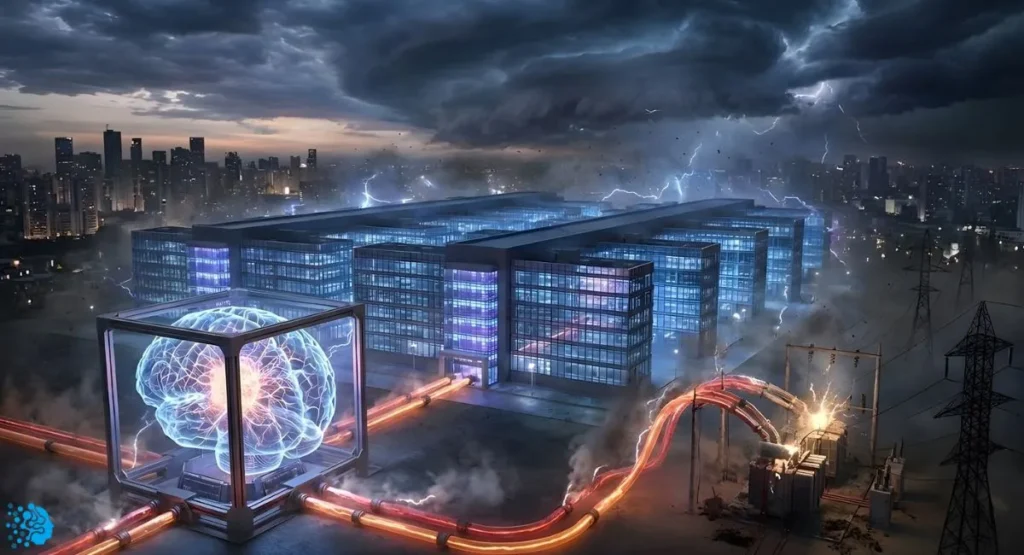
AI energy demand is outpacing supply, and leaders must act now, especially as AI advisor systems accelerate compute usage across industries. The warning from Nscale’s CEO at Davos shows that the power shortage is real, and it will affect every AI project that relies on continuous compute. Read on to discover how you can keep your AI engines running without breaking the grid or your budget.
- Why AI energy demand is a critical business issue
- How compute‑intensive models drive power consumption
- The real‑world energy footprint of training vs inference
- Data center location and cooling: hidden energy costs
- Tariff volatility and geopolitical factors affecting AI budgets
- Renewable power options for AI workloads
- Emerging energy‑efficient hardware and software techniques
- Practical steps for CEOs to audit and reduce AI energy use
- Case studies of companies that cut AI power costs
- Future scenarios for AI energy demand through 2030
-
Frequently asked questions
- Why is AI energy demand rising faster than overall electricity consumption?
- Can existing data centers be retrofitted for lower AI energy use?
- How do energy tariffs affect AI project budgeting?
- What is a Power Purchase Agreement and why should AI firms consider it?
- Are there standards for reporting AI energy consumption?
- How much can quantization reduce inference energy?
- Is edge AI a viable solution to the energy shortage?
- What role do governments play in solving the AI‑energy gap?
- When will AI‑optimized chips become the default in data centers?
- What is the first step for a mid‑size enterprise to assess its AI energy footprint?
- Conclusion
- Trusted sources and references
Why AI energy demand is a critical business issue
AI workloads already consume roughly 400 TWh of electricity each year, which equals about two percent of global power use. This share is projected to double by 2030 if no corrective actions are taken. The direct impact is higher operating expenses, tighter regulatory scrutiny, and the risk of service interruptions during peak demand periods.
Understanding the magnitude of the problem helps executives allocate capital to energy‑efficient infrastructure rather than treating power as a hidden cost. Companies that ignore the trend may see margin compression as energy tariffs rise and carbon‑pricing schemes become stricter. In contrast, proactive firms can turn energy savings into a competitive advantage while supporting sustainability goals. This mirrors how AI workplace tools are already reshaping enterprise operations and cost structures.
How compute‑intensive models drive power consumption
Modern large language models contain billions of parameters and require petaflops of processing power to train and serve. Each additional parameter adds a linear increase in the number of floating‑point operations, which directly translates into higher electricity draw. The shift from batch‑only training to 24/7 inference amplifies the baseline load because models now run continuously for chatbots, recommendation engines, and autonomous systems.
Compared with legacy AI applications, today’s compute‑first mindset pushes data centers to operate near their thermal limits. This creates a feedback loop where more cooling is needed, which in turn consumes more power. The economic stakes are high: McKinsey estimates AI‑driven revenue could add $13 trillion to the global economy, but every dollar earned is powered by kilowatts that must be sourced responsibly.
The real‑world energy footprint of training vs inference
Training a single large language model can burn around 600 MWh of electricity, equivalent to the annual consumption of a small town. Once deployed, the same model may consume roughly 150 MWh per day for inference across a global user base. While training is a one‑off expense, inference becomes a steady drain on power resources.
Sector breakdown in 2025 shows cloud providers responsible for 45 % of AI energy use, enterprise data centers 30 %, edge and IoT devices 15 %, and research labs 10 %. This distribution highlights why data‑center power consumption is the linchpin of the AI‑energy equation. Reducing inference energy through model optimization can therefore generate the biggest ongoing savings.
Data center location and cooling: hidden energy costs
Where a data center sits determines both the carbon intensity of the grid and the cost of electricity. Facilities in regions with coal‑heavy grids emit more CO₂ and face higher tariffs, while those in Scandinavia or Iceland can benefit from low‑cost renewable power. Cooling is another hidden expense; AI chips generate up to five times more heat than traditional CPUs, forcing operators to adopt liquid cooling or advanced airflow strategies.
Building new hyperscale sites takes twelve to eighteen months, a timeline that lags behind the rapid release cycles of AI models. Companies that colocate workloads in low‑carbon, low‑tariff zones can shave ten to twenty percent off total AI electricity spend, a margin that quickly adds up at scale. This challenge mirrors how software reliability is becoming a core differentiator in AI-driven infrastructure planning.
Tariff volatility and geopolitical factors affecting AI budgets
European electricity prices reached €0.31 per kWh in the fourth quarter of 2025, a twelve percent increase year over year according to Eurostat. In parallel, China’s “AI Power Fund” pledged $4 billion for renewable‑backed AI clusters, creating a surge in demand for clean‑energy contracts. These contrasting policies illustrate how subsidies and price spikes can reshape the competitive landscape. These pressures also affect talent acquisition strategies as companies compete for AI expertise under tighter margins.
Supply‑chain shocks, such as recent semiconductor shortages, forced manufacturers to keep older, less efficient chips in production longer, inflating power draw. Energy cost volatility now ranks as a strategic risk for AI projects, on par with data‑privacy compliance. Executives must model multiple tariff scenarios to protect margins and avoid surprise cost overruns.
Renewable power options for AI workloads
Globally, renewable electricity accounts for twenty‑nine percent of total generation, but only eighteen percent of AI data‑center power in 2025. Projects such as Microsoft’s underwater data center powered by hydroelectricity in Norway have demonstrated a twenty‑five percent lower power usage effectiveness (PUE). Solar‑plus‑storage micro‑grids, like Nscale’s Arizona pilot, reduced peak demand by fifteen percent.
Dynamic workload shifting, exemplified by Amazon Web Services “Eco‑Mode,” moves compute to periods when renewable output peaks, achieving up to twenty percent carbon reduction. However, intermittency remains a challenge; solar and wind cannot guarantee the ninety‑nine‑point‑nine‑nine‑nine‑nine percent uptime demanded by mission‑critical AI services. Pairing renewables with grid‑scale battery storage and smart orchestration is essential to bridge the reliability gap.
Emerging energy‑efficient hardware and software techniques
AI‑optimized silicon such as NVIDIA Hopper and Google TPU v5 delivers two to three times more performance per watt than previous generations. Google reports a thirty percent drop in training energy for its Gemini models after adopting the new TPU. Software‑level innovations like quantization, pruning, and sparse transformers further cut compute cycles, with OpenAI’s “GPT‑4‑Turbo” using forty percent fewer GPU hours.
Edge AI chips, for example Qualcomm Snapdragon 8 Gen 3, move inference to the device, eliminating the need for data‑center hops and saving ten percent of network energy per video frame. By combining hardware upgrades with algorithmic efficiencies, organizations can halve the energy required for comparable AI performance, turning sustainability into a cost‑saving lever.
Practical steps for CEOs to audit and reduce AI energy use
The first action is to deploy an internal dashboard that tracks kilowatt‑hours per model, such as PowerMetrics. Set a baseline KPI of energy per inference not exceeding 0.02 Wh for production workloads. This visibility enables data‑driven decisions about where to invest in efficiency.
Next, negotiate long‑term power purchase agreements (PPAs) in regions with abundant renewable resources, like Scandinavia or the Pacific Northwest. Prioritize procurement of next‑generation GPUs and TPUs that deliver higher FLOPS per watt. Implement “green scheduling” tools that shift heavy training jobs to times when wind or solar generation peaks, reducing reliance on fossil‑fuel peaker plants.
Finally, partner with utilities for demand‑response programs that reward temporary load reductions during grid stress events. Publicly disclose AI energy metrics in ESG reports to align with emerging standards such as SASB 2025. Companies that follow this roadmap can expect a fifteen to twenty‑five percent reduction in AI‑related electricity spend within twelve months.
Case studies of companies that cut AI power costs
Nscale built a solar‑plus‑battery micro‑grid for its Arizona AI campus, a ten‑megawatt installation that lowered peak‑grid draw by eighteen percent and saved $3.2 million year over year. Meta adopted sparse transformer models for content recommendation, achieving a forty‑five percent reduction in inference energy while boosting click‑through rates by twelve percent.
Amazon Web Services launched “Sustainability Zones” powered entirely by renewable energy, delivering a thirty percent lower carbon intensity for AI customers and accelerating adoption of AWS Trainium chips. Google’s underwater data center, powered by tidal energy, reached a world‑record PUE of 1.08 for AI workloads, demonstrating that extreme cooling and renewable power can coexist at scale.
These examples prove that energy‑smart AI is feasible and delivers measurable return on investment, reinforcing the business case for immediate action.
Future scenarios for AI energy demand through 2030
Three plausible pathways illustrate how the industry could evolve. The business‑as‑usual scenario assumes a five percent annual AI compute growth and modest renewable rollout, resulting in eight hundred terawatt‑hours of demand by 2030 with seventy percent of power still sourced from fossil fuels. The green acceleration scenario envisions seven percent AI growth, aggressive renewable investment and storage, cutting demand to six hundred fifty terawatt‑hours and raising renewable share to fifty‑five percent.
A tech‑leap scenario combines ten percent AI growth with widespread adoption of energy‑efficient chips, lowering total demand to six hundred terawatt‑hours and achieving a sixty percent renewable mix. Even the most optimistic outlook still requires substantial new clean capacity, underscoring that policy, infrastructure, and technology must move together. CEOs who act now can influence which curve their industry follows.
Frequently asked questions
Why is AI energy demand rising faster than overall electricity consumption?
AI models are far more compute‑intensive than traditional software, and the shift to continuous inference adds a constant power draw that outpaces the modest growth in global electricity generation.
Can existing data centers be retrofitted for lower AI energy use?
Yes, upgrading to liquid cooling, deploying AI‑specific ASICs, and adding on‑site renewable generation can reduce power usage effectiveness by ten to fifteen percent without building new facilities.
How do energy tariffs affect AI project budgeting?
Higher tariffs increase operating expenses directly. Modeling multiple tariff scenarios helps executives forecast realistic ROI and avoid surprise cost overruns.
What is a Power Purchase Agreement and why should AI firms consider it?
A PPA locks in a fixed price for renewable electricity, shielding AI operators from market volatility while supporting clean‑energy projects that can power compute workloads.
Are there standards for reporting AI energy consumption?
The ISO 50001 energy management standard and the SASB climate‑related disclosure framework now include AI‑specific metrics, encouraging transparent reporting.
How much can quantization reduce inference energy?
Eight‑bit quantization typically trims inference energy by thirty to forty percent with minimal impact on model accuracy for many applications.
Is edge AI a viable solution to the energy shortage?
For latency‑critical tasks, edge AI reduces data‑center traffic and saves network and cooling energy, though total savings depend on device density and workload distribution.
What role do governments play in solving the AI‑energy gap?
Policies that subsidize renewable‑backed AI clusters, impose carbon pricing, and fund high‑efficiency chip research can accelerate the transition to sustainable AI.
When will AI‑optimized chips become the default in data centers?
Analysts expect more than seventy percent of new hyperscale capacity to be equipped with AI‑specific silicon by 2027, driven by performance‑per‑watt advantages.
What is the first step for a mid‑size enterprise to assess its AI energy footprint?
Deploy a lightweight monitoring agent such as NVIDIA DCGM on all AI nodes, aggregate kilowatt‑hour data, and benchmark against industry baselines to identify high‑impact improvement areas.
Conclusion
Addressing AI energy demand now protects margins, strengthens ESG performance, and ensures sustainable growth as AI adoption accelerates.
Trusted sources and references



I’m Fahad Hussain, an AI-Powered SEO and Content Writer with 4 years of experience. I help technology and AI websites rank higher, grow traffic, and deliver exceptional content.
My goal is to make complex AI concepts and SEO strategies simple and effective for everyone. Let’s decode the future of technology together!